2026
Tearing stability prediction combining toroidal calculations with a two-fluid slab layer
D.A. Burgess, N.C. Logan, J.K. Park, C.J. Hansen, C. Paz-Soldan
Plasma Physics and Controlled Fusion
Columbia Fusion Research Center
I'm a Ph.D. candidate specializing in nuclear fusion, plasma physics, and scientific computing.
My research is focused on magnetohydrodynamic (MHD) stability of tokamaks, building open source simulation tools, and validating instability theory with experimental data.
D.A. Burgess, N.C. Logan, J.K. Park, C.J. Hansen, C. Paz-Soldan
Plasma Physics and Controlled Fusion
C. Hansen, I.G. Stewart, D.A. Burgess, et al.
Computer Physics Communications
D.A. Burgess, K. Mori, C.J. Hailey, et al.
The Astrophysical Journal
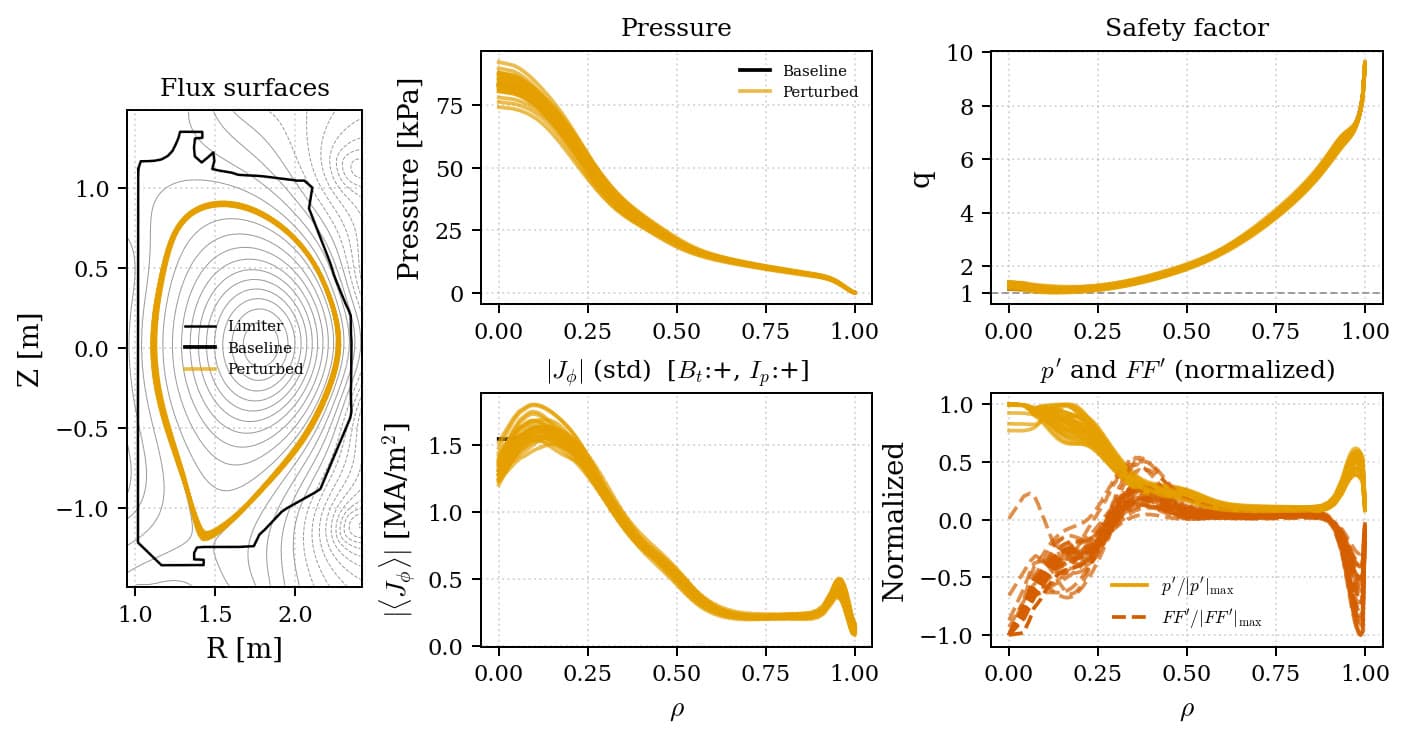
Developed an open-source toolkit that generates families of self-consistent perturbed tokamak equilibria for uncertainty quantification. Correlated density and temperature perturbations are drawn from Gaussian-process posteriors, each sample is solved through TokaMaker's Grad–Shafranov solver, the electric current distribution is iteratively recalculated, and the full ensemble is archived to a user-friendly database.
Built a real-time tokamak control-room simulator that runs entirely in the browser: a Rust physics engine compiled to WebAssembly drives power-balance transport, analytic Grad–Shafranov equilibria, and ELM/disruption dynamics for DIII-D, JET, ITER, and a negative-triangularity concept, with literature-standard scalings (IPB98(y,2), Troyon, Greenwald, Eich) behind an interactive React control room with shot planning and synthetic diagnostics.
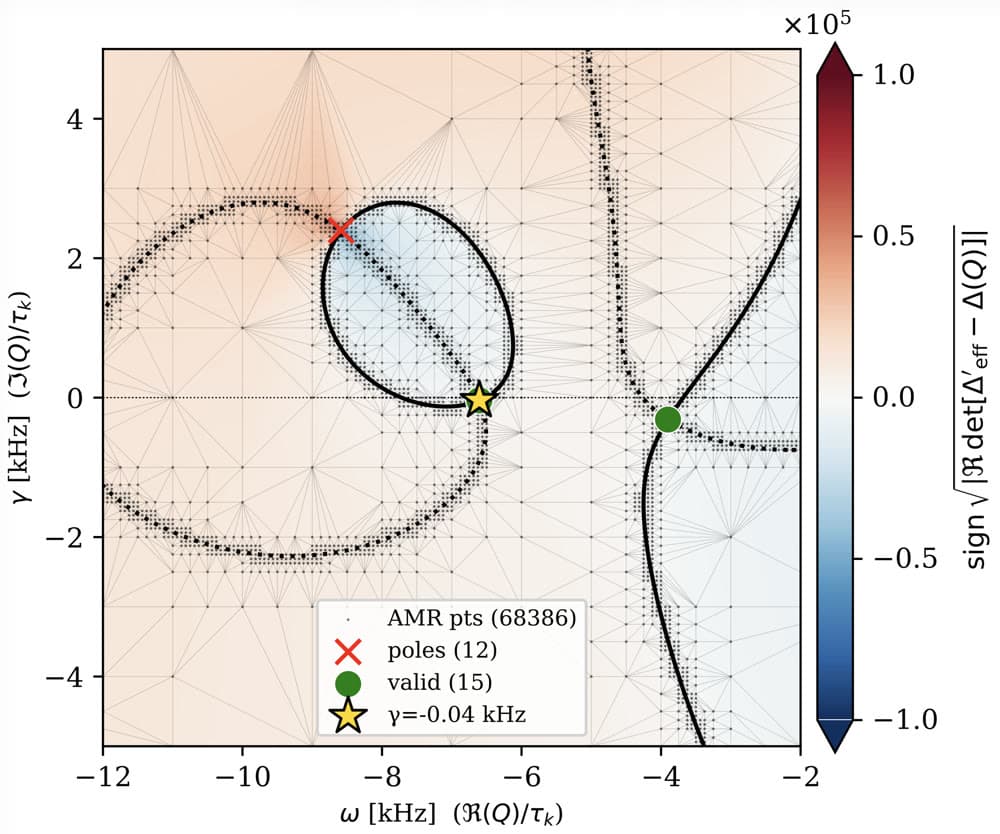
Redeveloped and expanded SLAYER to include updated physics and quadtree adaptive mesh refinement (AMR) for robust calculation of both uncoupled and coupled classical tearing mode growth rates. AMR approach achieved over 20x speedup in root finding procedure.
Mentored Kevin Clavijo in development of tokamak pedestal scaling routines for edge-localized mode stability analysis.
TA for APPH E4101 (Dynamical Systems), APPH E4100 (Quantum Physics), and ASTR W2001 (Intro to Astrophysics). Graded coursework and led student review sessions.
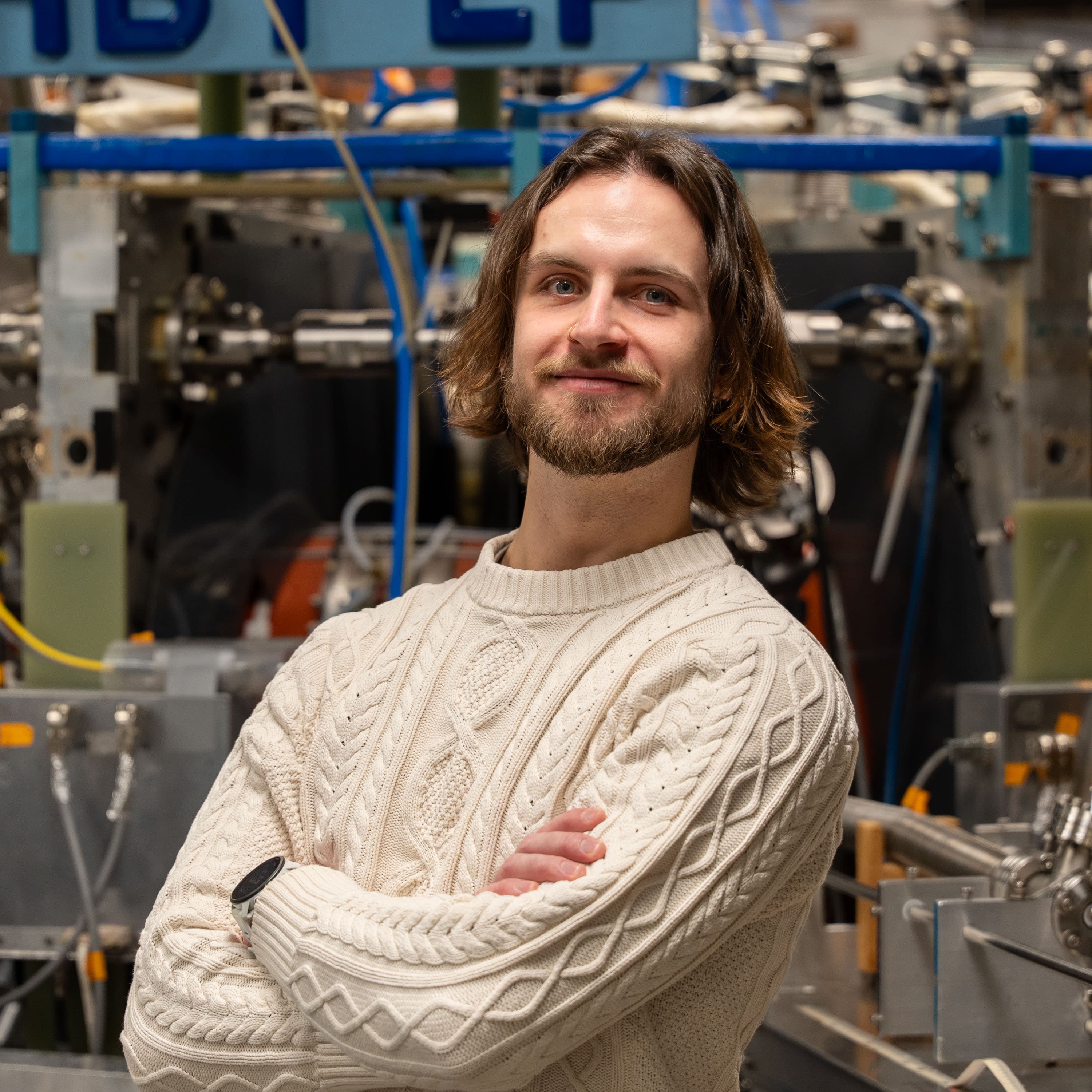
I am currently a Ph.D. candidate at Columbia University, where I explore the intersection of plasma physics and high-performance computing. I joined the program in Fall 2022 after receiving my B.A. in astrophysics, also from Columbia. My research focuses on the magnetohydrodynamic (MHD) stability of tokamak plasmas to tearing modes, modeling of scenarios and control for the SPARC and ARC tokamaks, and development of open source tools such as TokaMaker and the GPEC suite.
I'm excited to lead efforts that bridge fusion theory and experiment through rigorous validation and handling of measurement uncertainties, and I'm additionally passionate about mentoring the next generation of high school and undergraduate students. In my free time I enjoy running, skiing, gravel cycling, and playing guitar with friends or strangers.